
How to join Navy Federal through a family member.
You don't have to serve to join Navy Federal Credit Union. Eligibility runs through a sponsor, and the family list is wider than most people think.
My grandfather served in the Army. He passed away before I was born, and I was still eligible to join Navy Federal through him. Most people never check, because they assume you have to be in the military yourself.
Navy Federal's field of membership includes servicemembers, veterans, Department of Defense personnel and their families. The way in for most civilians is a sponsor: someone who qualifies, and to whom you are related or with whom you share a household.
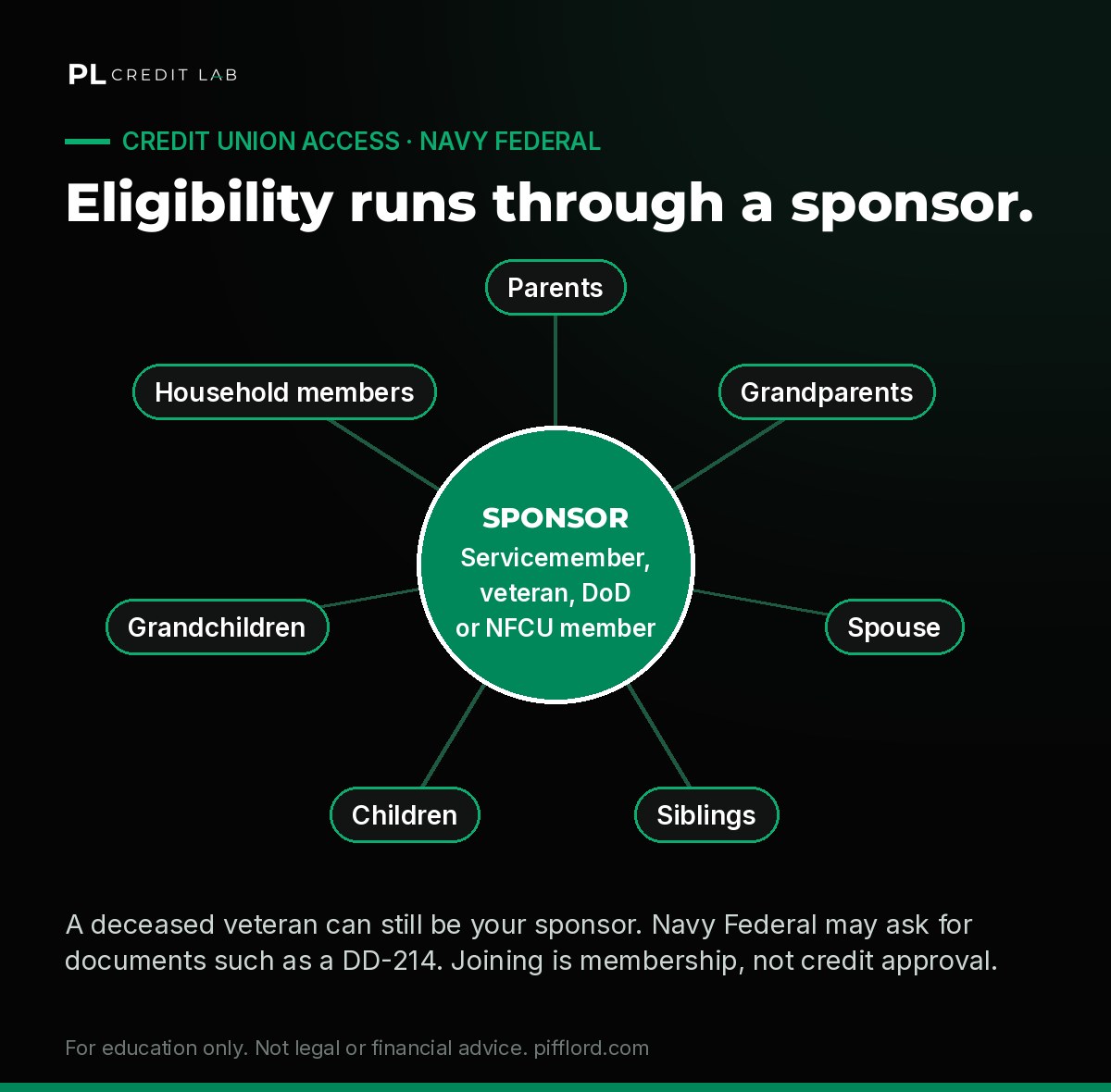
Who can sponsor you, per Navy Federal's membership FAQ.
Who counts as family
Navy Federal lists immediate family as parents, grandparents, spouses, siblings, children (including adopted and stepchildren) and grandchildren. Household members, including roommates, can also qualify; Navy Federal suggests you have shared the address as a contributing member for 30 to 60 days and can show a lease, utility bill or pay stub.
If your veteran has passed away
A deceased servicemember or veteran can still qualify you. Navy Federal may ask for documentation showing they would have been eligible, such as a DD-214 (the military discharge record). If you don't have one, a family member may, or it can be requested from the National Archives.
What to have ready
- Your sponsor's last name and relationship to you.
- Their Navy Federal Access Number if they are a member, or the identifying details Navy Federal asks for on the application.
- Documentation of service (such as a DD-214) if the sponsor is a veteran who is not a member.
- Your own ID and proof of address.
Step by step
- Confirm your sponsor and your relationship on Navy Federal's membership page.
- Gather the documents: your ID and proof of address, and your sponsor's details or proof of service.
- Pull your ChexSystems and Early Warning files first, so a surprise record doesn't stop the application.
- Apply for membership and open the share savings account. Decline add-ons you don't need, such as an overdraft line, at this stage.
- Use the account for a while before you apply for a card or loan, and check which bureau your file is strongest on.
Joining is not approval
Membership opens the door. Cards and loans are a separate credit decision. Two things to check before you apply for either:
- Your banking files. Credit unions screen ChexSystems or Early Warning before opening a savings account. A negative record can block membership even when you are eligible.
- Which bureau they pull. Consumer-reported data suggests Navy Federal most often pulls TransUnion for cards, sometimes Equifax or Experian, and it varies by applicant and state. If a file is frozen, lift the freeze on the one they will pull before you apply.
- Many credit unions have open pathways through partner associations and foundations.
- Some pay the small joining fee for you.
- Our free credit union page walks through six of them.
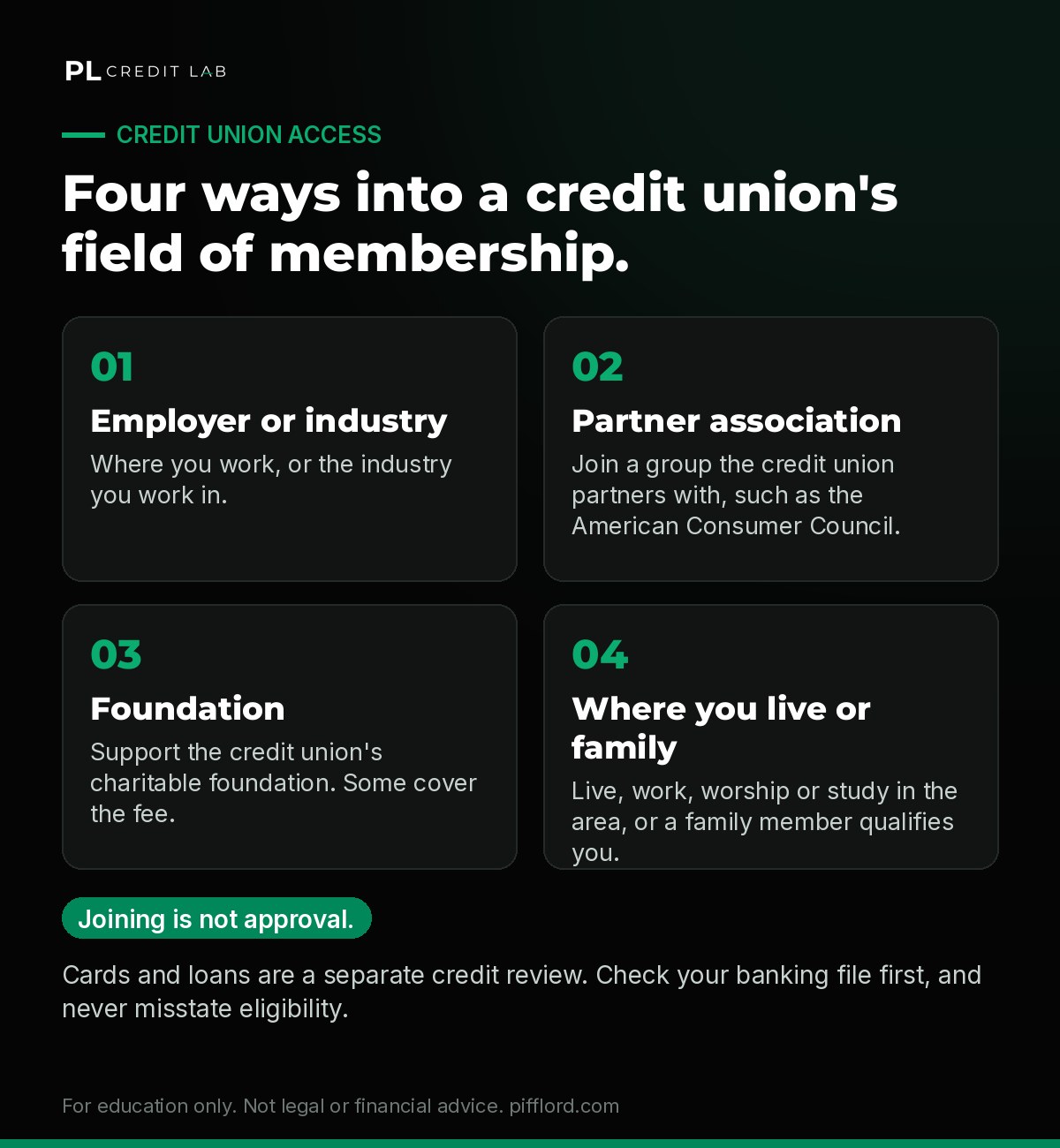
Navy Federal is one door. There are others.
For educational purposes only. Not legal or financial advice. PL Credit Lab is a brand of PIFFLORD LLC and is not a credit repair organization, law firm or lender. No score, deletion, approval, funding amount or timeline is promised. You can dispute inaccurate information with the credit bureaus yourself at no cost.
Common questions.
Do I have to be in the military to join Navy Federal?
No. Family and household members of eligible servicemembers, veterans, DoD personnel and existing members can join through a sponsor.
Can a grandparent sponsor me?
Yes. Navy Federal lists grandparents and grandchildren as immediate family.
What if my veteran relative is deceased?
They can still qualify you. You may need documentation such as a DD-214 showing they would have been eligible.
Does joining Navy Federal guarantee a credit card or loan?
No. Membership and credit approval are separate decisions.
Find the best credit union you can join.
Credit union access
Partner associations, foundations, open charters and six credit unions to know.
Read the free pageThe Credit Union Access Guide
The family route, the American Consumer Council route, a decision path and a join checklist.
Get the guide for $10Check your banking files first
Upload your reports and see what a credit union will see.
Get my free review